
The brief
My capstone at SCAD started with a deceptively simple brief: create a real brand from nothing. No existing assets, no client guardrails, no team. So I built FiddleLeaf, a concept houseplant accessories brand designed for the millennial plant parent who wants their green space to be as intentional and cultivated as their Instagram feed.
The challenge
As anyone with writer’s block knows, starting with a blank page is intimidating. This project required equal parts research, strategy and creative vision to build a cohesive brand architecture that could scale, stay consistent across channels and genuinely connect with a highly specific, aesthetically-driven audience.
The deliverable
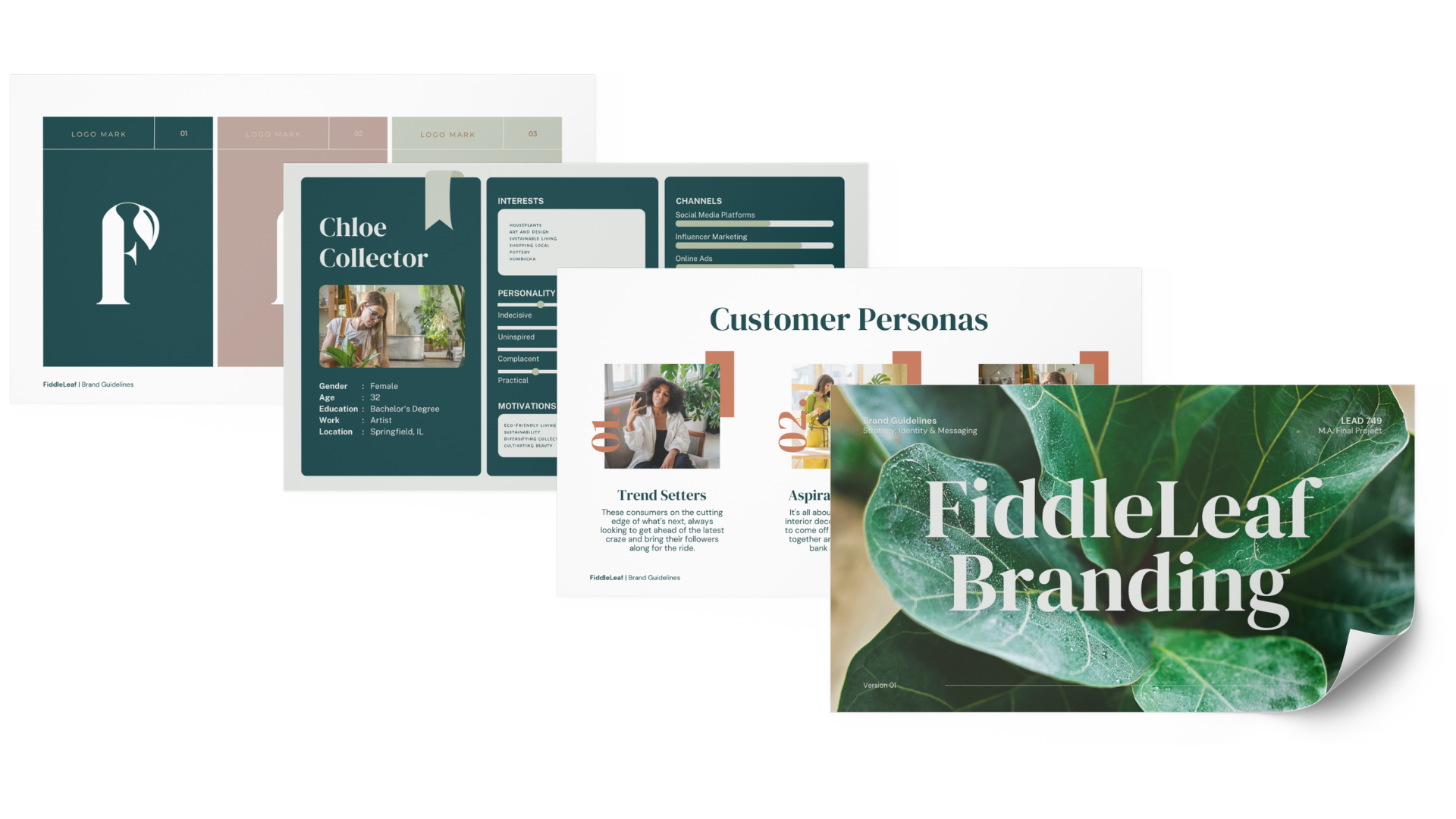
The result is a 25-page brand guidelines document covering three interconnected disciplines:
Brand Strategy: Including a mission, vision and purpose statement; core brand values; and three detailed customer personas built from psychographic research and audience insight.
Visual Identity: Including a custom logo concept featuring a stylized leaf integrated into the letterform, a six-color palette, a typography system, photography guidelines and a curated social media moodboard.
Brand Messaging: Including a brand positioning statement, voice and tone guidelines, three messaging pillars and channel-specific guidelines for social, website, email and customer support, plus a performance measurement framework to track brand awareness, engagement and growth over time.
The result
FiddleLeaf isn’t a real brand. But the guidelines are thorough enough that it could be tomorrow.
That’s the point.
Brand development has to be holistic—connecting audience insight to visual identity, and visual identity to messaging strategy, in a way that feels intentional and cohesive across every turn.
Great brands aren’t built on aesthetics alone. They’re built on a clear point of view, a genuine understanding of the audience and a commitment to consistency across every channel and communication.