
The brief
When I joined TelNet in 2019, digital marketing was essentially nonexistent. All new business had historically come through an indirect agent channel, which meant no in-house creative team, no digital campaigns, no content library and no cohesive brand voice. What did exist were product slicks filled with telecom jargon, outdated visuals and no discernible point of view.
My mission was to build a marketing function from scratch. That meant assembling a team, developing a content production process, establishing a brand narrative and executing campaigns—all at the same time.
The team
Creating a successful digital marketing funnel is not a one-man job. And pulling together an agile creative team with the right mix of skills, experience and attitude is not an easy task. It took me about a year to bring together the right people.
The final lineup: a graphic designer for all animation, asset creation and document design; a visual designer for web design and development, with an emphasis on UX and UI design; and a digital content producer for social media management, copywriting and video production.
Together, we became the human equivalent of a content production machine.
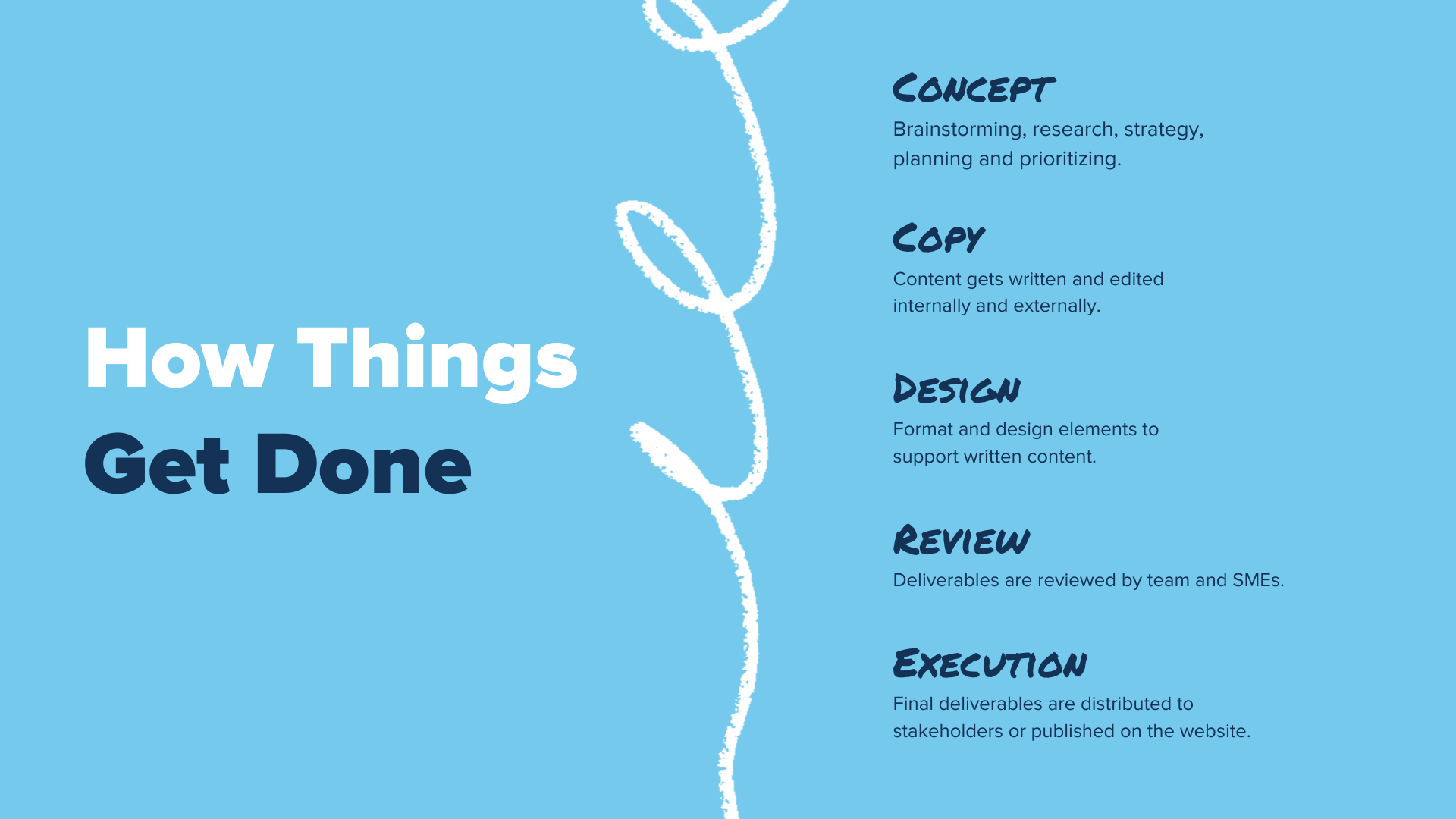
The process
Speed and quality rarely coexist naturally. Making them work together required a clear, repeatable workflow. Every campaign started with a collaborative brainstorm to map projects, deadlines and responsibilities. Written content moved from writer to subject matter expert to graphic designer, while landing pages and supporting assets developed in parallel. Over the lifespan of each campaign, we iterated based on stakeholder feedback and analytics—quick execution, rapid experimentation and candid feedback at every stage.
The framework
To cut through the noise in a crowded, jargon-heavy industry, we needed more than a production process. We needed a strategic narrative foundation, a strategy for communicating in a clear, concise and easily digestible way. (Not to mention engaging and relatable—and that’s hard to do in telecom.)
I introduced the StoryBrand Framework early in my time at TelNet, and it became the philosophical backbone of everything we produced. The core insight is simple, but powerful: your customer is the hero of their own story, and your brand is their guide. The moment your brand positions itself as the hero, you lose your audience.

Pretty much every superhero movie you’ve ever seen follows this formula: a protagonist with a problem meets a mentor who lays out a plan and calls them to action. Marketing works exactly the same way.
Here’s the TelNet translation: our customers are modern professionals struggling with ineffective and frustrating communication technology. We’re the empathetic authority with over 20 years of experience and cloud-based solutions that make your work easier.
That message became the foundation of every social post, eBook, blog, video and email we produced.
The result
You can’t promote a campaign without content. You can’t develop content without a brand identity. And you can’t have a brand identity without a story to tell.

Lead generation and revenue growth will always determine marketing’s success—and the 570% increase in blog traffic and 64% increase in MQLs proved we achieved that.
But if you don’t have a solid narrative foundation to build upon, you’ll never be able to build the relationships that turn into business.
We built the brand for TelNet. But the story was always for our customers.